AI Vishing, AnyDesk, and $40M Stolen: Inside the Ransomware Gang Ukraine and the FBI Just Dismantled
AI Vishing, AnyDesk, and $40M Stolen: Inside the Ransomware Gang Ukraine and the FBI Just Dismantled
In November 2026, Ukrainian authorities working alongside the FBI arrested four key members of an international ransomware organization responsible for extorting more than $40.5 million from at least 28 companies across the oil and gas, pharmaceutical, manufacturing, logistics, and financial sectors. The group—linked to former Conti gang members and affiliated with BlackSuit and Chaos ransomware variants—used AI-generated voice calls to impersonate IT support, tricked employees into surrendering VPN credentials or installing remote-access tools such as AnyDesk and TeamViewer, then exfiltrated and encrypted corporate data. In one documented attack against Warren Oil Company, attackers stole 1.4 TB of data and collected an 84.5 BTC (~$5 million) ransom payment.
This arrest underscores the ongoing evolution of ransomware-as-a-business, where former top-tier gang members (Conti) splinter into new operations (Quantum → Royal → BlackSuit) and adopt AI-driven social engineering to bypass technical defenses. The case highlights how credential theft via vishing and phishing remains one of the most effective initial-access vectors, demanding renewed focus on identity verification, network segmentation, and egress controls.
Critical impact
Kill Chain
ICInitial Compromise(high)
PEPrivilege Escalation(high)
LMLateral Movement(high)
C&CCommand & Control(high)
EExfiltration(high)
IImpact(high)

Node2Shell (CVE-2026-111497): How a Bundled Brotli Decoder Puts 28 Siemens Industrial Products at Critical RCE Risk
In October 2026, the Node.js project disclosed a critical out-of-bounds write vulnerability—CVE-2026-111497, dubbed 'Node2Shell'—in the Brotli compression decoder (Google Brotli versions 1.0.3–1.2.0) bundled across its runtime. CISA republished Siemens ProductCERT advisory SSA-678870 on November 17, 2026, confirming that 28 Siemens industrial and engineering software products spanning Opcenter, Teamcenter, PADS, Simcenter, HyperLynx, and Xpedition lines are affected. With a CVSS v3.1 base score of 9.8 (Critical), an unauthenticated remote attacker can send a crafted Brotli-compressed stream to corrupt decoder memory, disclose sensitive data, cause denial of service, or achieve arbitrary code execution—with no patches currently available for any affected product.
This incident exemplifies the accelerating risk of open-source library vulnerabilities embedded deep within enterprise and industrial software supply chains. As manufacturing and PLM platforms increasingly expose web-facing APIs that accept compressed content, a single unpatched third-party codec can become a critical entry point into operational technology environments managing production, quality, and product lifecycle data.
Critical impact
Kill Chain
ICInitial Compromise(high)
PEPrivilege Escalation(medium)
LMLateral Movement(medium)
C&CCommand & Control(medium)
EExfiltration(medium)
IImpact(medium)

ARTEX Unmasked: How an AI Agentic Framework Became the Weapon of Choice for Spies and Cybercriminals
Beginning in August 2026, ARTEX—a Chinese-origin AI-powered agentic penetration testing platform—was weaponized by at least five distinct threat actor clusters spanning state-linked espionage groups and financially motivated cybercriminals. China-nexus actor VAPOR PANDA leveraged ARTEX to compromise organizations across 14 countries, targeting foreign ministries, defense contractors, and semiconductor firms, while Storm-0940 exploited a ConnectWise supply chain compromise to launch automated sign-in attacks against more than 2,250 Azure tenants. Criminal campaigns recovered over 300 code-signing certificates and 190,000 gaming credentials at a total model cost of $145–$1,500 per operation. In one documented case, an AI agent moved from a leaked GitHub secret to Azure Key Vault exfiltration in under five minutes.
ARTEX signals a structural shift in offensive cyber operations: agentic AI frameworks now enable machine-speed exploitation at near-zero cost, collapsing the time between vulnerability discovery and breach from days to minutes. The convergence of espionage and criminal use under a single open-source framework erodes traditional attacker attribution and demands that defenders prioritize secret rotation, EDR universality, and behavioral detection over indicator-based blocking.
Critical impact
Kill Chain
ICInitial Compromise(high)
PEPrivilege Escalation(high)
LMLateral Movement(high)
C&CCommand & Control(high)
EExfiltration(high)
IImpact(high)
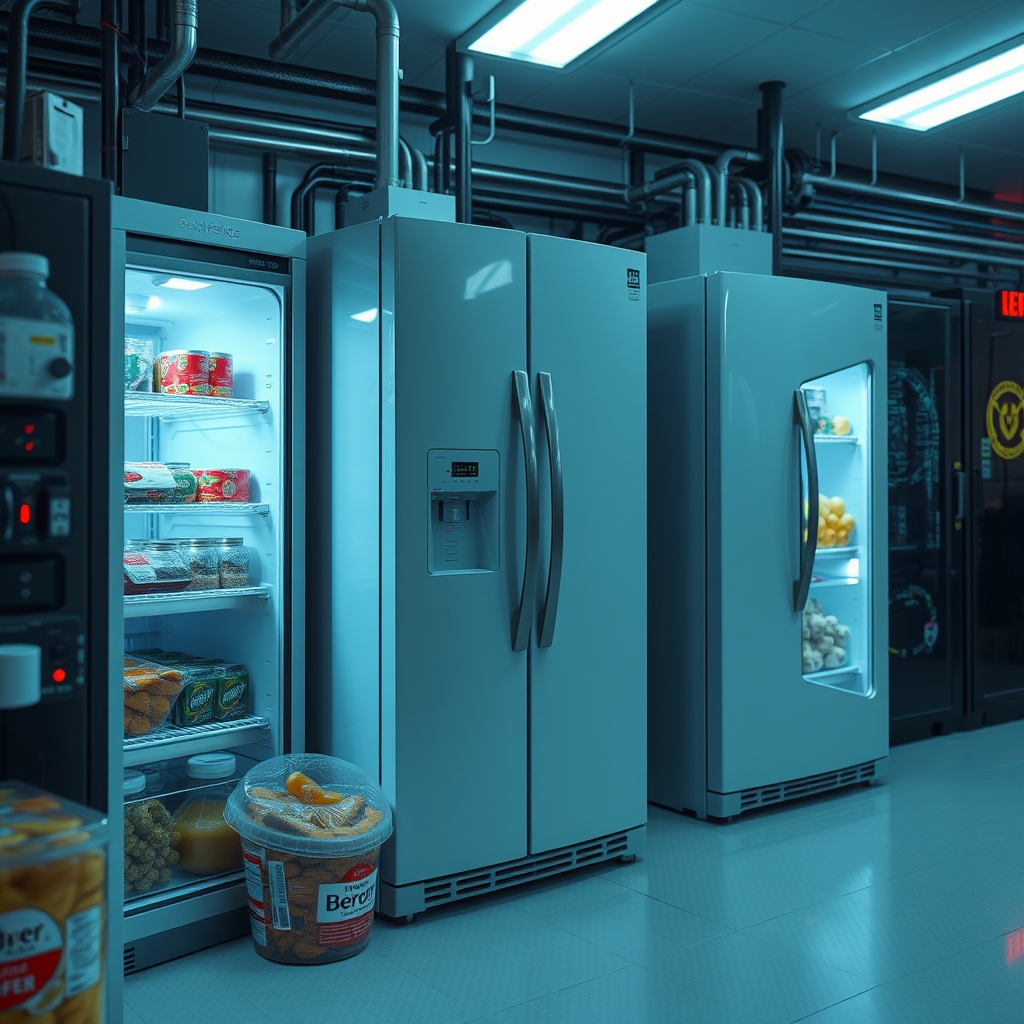
Refrigerators Under Attack: How ICS/OT Sabotage Is Threatening Food, Medicine, and Public Safety
In late October through November 2026, unknown threat actors conducted a sweeping campaign against internet-exposed industrial refrigeration controllers across Europe, targeting hundreds of supermarkets, food distributors, and medical storage facilities in at least twelve countries. Attackers exploited authentication bypasses, weak default credentials, and unpatched firmware on Danfoss StoreView and Copeland/Dixell XWEB units to remotely manipulate temperature and defrost settings—in some cases forcing units to 50°C (122°F)—resulting in mass food spoilage, financial losses, and equipment hazards. The French Blood Establishment confirmed that three blood plasma storage facilities were compromised. CISA, FBI, HHS, USDA, and DOT issued a joint advisory urging OT asset hardening, network isolation, and removal of unnecessary internet exposure.
This campaign marks a significant escalation in ICS/OT sabotage targeting cold-chain infrastructure—sectors that underpin food safety, pharmaceutical integrity, and public health. With Censys data showing hundreds of controllers still exposed globally and North America accounting for 38% of worldwide ICS exposure, the threat surface remains critically open. Regulators and sector owners face mounting pressure to enforce OT security baselines before similar attacks cross the Atlantic.
Critical impact
Kill Chain
ICInitial Compromise(high)
PEPrivilege Escalation(medium)
LMLateral Movement(medium)
C&CCommand & Control(high)
EExfiltration(low)
IImpact(high)

Cold-Chain Under Attack: How Two Waves of ICS/OT Sabotage Exposed Europe's Refrigeration Security Gap
In October and November 2026, an unknown threat actor executed two successive waves of cyberattacks against Internet-connected commercial refrigeration controllers at hundreds of European supermarkets across France, Belgium, Germany, the Netherlands, Portugal, Poland, Spain, Luxembourg, Estonia, Ireland, Sweden, and Finland. Attackers exploited unpatched firmware vulnerabilities and default credentials in controllers manufactured by Danfoss, Dixell, and Copeland—forcing systems into defrost mode at 50°C (122°F) and triggering widespread food spoilage. The first wave impacted over 700 stores; the second struck dozens more. No group has claimed responsibility, and European authorities are actively investigating.
These incidents underscore a worsening pattern of ICS/OT sabotage targeting Internet-exposed operational technology with poor security hygiene. As threat actors increasingly leverage automated scanning, credential stuffing, and known CVEs against legacy OT devices, the attack surface extends far beyond retail—threatening pharmaceutical cold storage, food distribution, and industrial temperature-control systems globally.
High impact
Kill Chain
ICInitial Compromise(high)
PEPrivilege Escalation(medium)
LMLateral Movement(medium)
C&CCommand & Control(medium)
EExfiltration(low)
IImpact(high)

Vapor Panda's ARTEX AI Campaign: How China-Nexus Hackers Automated Attacks on 200+ Organizations
Beginning October 17, 2026, a China-nexus threat actor tracked as Vapor Panda deployed ARTEX, an open-source multi-agent AI penetration-testing framework, in a sweeping cyberespionage campaign targeting more than 200 organizations across 14 countries. Victims span telecommunications providers in the United States and Belgium, government ministries in Greece, the Middle East, and Latin America, pharmaceutical and semiconductor firms, defense contractors, and financial institutions. AI agents orchestrated by DeepSeek and a second commercial LLM autonomously performed reconnaissance, exploited vulnerabilities, deployed web shells, harvested credentials, and pivoted laterally—all while human operators issued instructions in Chinese and intervened only at critical decision points. At least nine organizations were fully compromised, and the BLOODALCHEMY backdoor was deployed against government targets in Latin America and the Middle East.
This campaign represents a structural shift in nation-state tradecraft: AI agents now enable a single operator team to run dozens of simultaneous intrusions at machine speed, dramatically lowering the cost of large-scale cyberespionage. The DIVD breach—where ARTEX chained two zero-days to achieve root in 12 minutes—illustrates how agentic AI compresses the attacker's kill chain to intervals too short for human-speed defenses to interrupt.
Critical impact
Kill Chain
ICInitial Compromise(high)
PEPrivilege Escalation(high)
LMLateral Movement(high)
C&CCommand & Control(medium)
EExfiltration(high)
IImpact(medium)

Vapor Panda Used Agentic AI to Compromise 140 Targets in 11 Days—Here Is What That Means for Your Cloud Security
Beginning October 17, a China state-sponsored threat actor tracked by CrowdStrike as Vapor Panda deployed ARTEX—an agentic AI-powered penetration-testing framework paired with DeepSeek—to compromise approximately 140 of more than 200 targeted organizations across 14 countries in just 11 days. Targets spanned foreign ministries, defense and intelligence agencies, a European head-of-government office, and 19 U.S. organizations in pharmaceuticals, semiconductors, defense, nuclear, and financial sectors, as well as telecom providers in the United States, Belgium, and the Philippines. ARTEX enabled attack commands at rates exceeding 1,500 per hour—roughly 37 times the pace of traditional hands-on-keyboard intrusions—allowing simultaneous multi-target exploitation at near-zero marginal cost per victim.
This campaign marks the first confirmed nation-state deployment of agentic AI at scale for offensive cyber operations. CrowdStrike reports agentic adversary attacks grew nearly threefold month-over-month, from roughly 45 incidents in September to 126 in October 2024 and climbing, signaling a structural shift in the speed, breadth, and economics of state-sponsored intrusion campaigns that defenders must urgently address.
Critical impact
Kill Chain
ICInitial Compromise(high)
PEPrivilege Escalation(medium)
LMLateral Movement(medium)
C&CCommand & Control(medium)
EExfiltration(medium)
IImpact(high)

CISA ICSMA-26-288-01: Path Traversal in Thermo Fisher Torrent Suite Puts Genomic Data at Risk
In October 2026, CISA published ICS Medical Advisory ICSMA-26-288-01 disclosing a path traversal vulnerability (CVE-2026-107777, CWE-22) in Thermo Fisher Scientific's Torrent Suite Software versions 5.18 and earlier, a genomic sequencing platform widely deployed in healthcare and public health environments worldwide. An authenticated remote attacker can exploit the flaw by sending a crafted HTTP request that escapes the application's restricted directory, allowing arbitrary file reads on the underlying Torrent Server under the privileges of the web service account. Scored CVSS 3.1 at 6.5 (Medium) and CVSS 4.0 at 7.1 (High), the vulnerability exposes sensitive genomic, patient, and configuration data without requiring user interaction or elevated credentials beyond basic authentication. Thermo Fisher resolved the issue in Torrent Suite Software version 5.22.
Path traversal flaws in medical and ICS devices continue to be a primary vector for healthcare data breaches, with CISA and HHS reporting a sustained increase in targeted exploitation of unpatched clinical informatics platforms. The convergence of genomic research infrastructure with internet-accessible deployment architectures elevates the risk profile well beyond traditional IT vulnerabilities, making timely patching and network segmentation operationally critical.
Medium impact
Kill Chain
ICInitial Compromise(high)
PEPrivilege Escalation(medium)
LMLateral Movement(low)
C&CCommand & Control(low)
EExfiltration(high)
IImpact(medium)

Healthcare's Quantum Vulnerability Crisis: 94% of Medical Devices Lack Quantum-Safe Encryption
A comprehensive study by Forescout Technologies analyzing 2.5 million devices across 50+ healthcare organizations revealed critical gaps in post-quantum cryptography (PQC) readiness throughout the healthcare sector. The research found that only 50% of IT devices support PQC-capable SSH implementations, while operational technology devices lag at 16% and Internet of Medical Things (IoMT) devices at a mere 6%. Most concerning, over 5,500 Internet-exposed healthcare systems containing electronic medical records and imaging data showed only 31% adoption of TLS 1.3, the foundation for standardized post-quantum cryptography. This widespread vulnerability exposes sensitive patient data to 'harvest now, decrypt later' attacks, where encrypted health information stolen today could be decrypted once quantum computers become sufficiently powerful.
This research highlights an urgent emerging threat as quantum computing advances accelerate and nation-state actors increasingly target healthcare infrastructure. With medical records maintaining value for decades and healthcare being the most ransomware-targeted sector, organizations face a narrow window to implement quantum-resistant encryption before cryptographically relevant quantum computers emerge.
Medium impact
Kill Chain
ICInitial Compromise(high)
PEPrivilege Escalation(medium)
LMLateral Movement(high)
C&CCommand & Control(medium)
EExfiltration(high)
IImpact(medium)

IQVIA's $7.8M Fine Exposes Critical Healthcare Data Anonymization Gaps
In October 2026, Italy's Data Protection Authority fined IQVIA €7 million ($7.8M) for inadequate health data anonymization practices that put approximately one million patients at risk of re-identification. The multinational healthcare analytics company aggregated data from 800 general practitioners, using unique patient codes that could be combined with detailed medical information to track and de-anonymize individuals over time. IQVIA processed this data without proper legal basis, failed to inform patients, and maintained records dating back to 2001 without established retention periods. For 3,300 patients, the company also stored full personal identifiers including names and addresses. This incident highlights critical gaps in pseudonymization techniques and GDPR compliance within healthcare data processing operations.
This case represents a growing trend of regulatory enforcement against healthcare organizations mishandling sensitive data, as authorities worldwide intensify scrutiny of data anonymization practices amid rising healthcare digitization and AI-driven analytics deployments.
High impact
Kill Chain
ICInitial Compromise(medium)
PEPrivilege Escalation(medium)
LMLateral Movement(medium)
C&CCommand & Control(medium)
EExfiltration(high)
IImpact(high)

Veradigm Breach Exposes Critical Gaps in Healthcare API Security
In September 2026, healthcare technology company Veradigm disclosed a significant data breach affecting 3.5 million patient records after The Gentlemen ransomware group compromised a third-party vendor's credentials. The attackers gained access to a limited Veradigm API interface, exfiltrating personal information including names, addresses, Social Security numbers, and contact details. While clinical data remained secure, the incident exposed critical vulnerabilities in third-party vendor access controls and API security frameworks.
This incident highlights the growing threat of supply chain attacks targeting healthcare organizations, coinciding with increased ransomware activity against medical providers and stricter regulatory scrutiny under evolving HIPAA enforcement priorities.
High impact
Kill Chain
ICInitial Compromise(high)
PEPrivilege Escalation(high)
LMLateral Movement(medium)
C&CCommand & Control(low)
EExfiltration(high)
IImpact(high)
Critical DoS Vulnerability Exposes Rockwell Automation Industrial Controllers to Remote Attack
A critical denial-of-service vulnerability (CVE-2026-9637) affects multiple Rockwell Automation Logix Platform controllers including ControlLogix 5580, CompactLogix 5380, GuardLogix 5580, and Compact GuardLogix 5380 systems. The vulnerability stems from improper validation of input length during Common Industrial Protocol (CIP) message processing, allowing remote attackers to trigger a major nonrecoverable fault (MNRF) that requires a complete power cycle to restore operations. Affected versions span firmware releases up to V33 and specific ranges in V34-V36 branches, impacting critical manufacturing infrastructure worldwide.
This vulnerability highlights the ongoing targeting of industrial control systems and the critical need for robust OT security measures. As industrial networks become increasingly connected and Nation-state actors continue to probe critical infrastructure, vulnerabilities in widely-deployed platforms like Rockwell's Logix controllers represent significant national security and operational continuity risks that require immediate attention.
High impact
Kill Chain
ICInitial Compromise(high)
PEPrivilege Escalation(low)
LMLateral Movement(medium)
C&CCommand & Control(medium)
EExfiltration(low)
IImpact(high)



