Four CVEs, Four Threat Vectors: How the November 2026 CISA KEV Additions Expose Cloud, AI, and NAS Infrastructure Simultaneously
Four CVEs, Four Threat Vectors: How the November 2026 CISA KEV Additions Expose Cloud, AI, and NAS Infrastructure Simultaneously
In November 2026, CISA added four critical vulnerabilities—CVE-2026-90436 (Apache Axis RCE), CVE-2026-90817 (REDCap code injection), CVE-2026-40217 (LiteLLM privilege escalation), and CVE-2024-10441 (Synology DSM RCE)—to its Known Exploited Vulnerabilities catalog following confirmed active exploitation. Threat actors weaponized CVE-2026-90436 against Atlassian Confluence instances to harvest credentials, query cloud data warehouses, and perform AS-REP Roasting within minutes of initial access. CVE-2026-90817 enabled cryptominer deployment via in-memory loaders, CVE-2026-40217 was leveraged in LLMjacking campaigns targeting financial and retail sectors, and CVE-2024-10441 facilitated C3RB3R ransomware deployment against Synology NAS devices.
These four KEV additions represent a convergence of ransomware, cryptomining, and AI infrastructure abuse into a single advisory cycle, signaling that attackers are simultaneously targeting legacy SOAP libraries, research data platforms, AI inference APIs, and storage appliances—broadening the attack surface enterprises must defend in real time.
Critical impact
Kill Chain
ICInitial Compromise(high)
PEPrivilege Escalation(high)
LMLateral Movement(high)
C&CCommand & Control(high)
EExfiltration(high)
IImpact(high)

Race to Admin: How CVE-2026-126088 Lets Attackers Create Rogue Accounts in OpenPLC Runtime
In November 2026, CISA published ICS Advisory ICSA-26-323-01 disclosing a critical race condition vulnerability (CVE-2026-126088, CVSS 4.0: 9.2) in Autonomy Logic OpenPLC Runtime versions 4.2.4 and earlier. The flaw, rooted in CWE-362 concurrent execution with improper synchronization, allows an unauthenticated remote attacker to send parallel HTTP requests that each pass an existence check before any user record is committed—resulting in multiple rogue admin accounts being created without credentials. Affected deployments span critical infrastructure sectors including energy, manufacturing, transportation, and water systems worldwide. The vendor has released version 4.3.0 as the remediation.
OpenPLC is widely deployed as an open-source programmable logic controller runtime in operational technology environments, making unauthenticated admin account creation particularly dangerous. This vulnerability class is resurging across ICS platforms as attackers pivot from IT networks to OT systems, and regulatory scrutiny of control system security under frameworks like NERC CIP and ICS-CERT guidance continues to intensify.
High impact
Kill Chain
ICInitial Compromise(high)
PEPrivilege Escalation(high)
LMLateral Movement(medium)
C&CCommand & Control(medium)
EExfiltration(medium)
IImpact(medium)

Unpatched and Dangerous: CVE-2026-125132 Integer Underflow in libumqtt Threatens Global Critical Infrastructure
In November 2026, CISA issued ICS Advisory ICSA-26-323-03 disclosing a critical integer underflow vulnerability (CVE-2026-125132, CVSS v4.0: 8.8 HIGH) in libumqtt, an open-source MQTT client library maintained on GitHub. All versions up to and including 1.1.1 are affected. A remote, unauthenticated attacker can exploit this memory corruption flaw over the network with no user interaction required, potentially triggering denial of service, arbitrary memory corruption, or sensitive information disclosure. The vulnerability affects critical infrastructure sectors including Energy, Critical Manufacturing, Transportation Systems, Information Technology, and Water and Wastewater globally. No patch is currently available, as the repository maintainers did not respond to CISA coordination requests.
MQTT is a foundational protocol for IoT and industrial control systems, making memory corruption vulnerabilities in its client libraries especially dangerous. The lack of vendor response and absence of an available patch leave operators with no straightforward remediation path, forcing reliance on network-level controls and segmentation as compensating measures while exploitation risk remains unresolved.
High impact
Kill Chain
ICInitial Compromise(high)
PEPrivilege Escalation(medium)
LMLateral Movement(medium)
C&CCommand & Control(medium)
EExfiltration(medium)
IImpact(high)

CISA ICSA-26-323-02: Elecbrakes Trailer Brake Controllers Expose Critical BLE Authentication Bypass — No Patch for Legacy ELBC2000
In November 2026, CISA published ICS Advisory ICSA-26-323-02 disclosing three critical vulnerabilities in Elecbrakes trailer brake controllers—the EB2, VM1, and legacy ELBC2000—used across Australia and New Zealand. Researchers Patrick Forck and Jeremy McCarthy of Element Digital identified that any Bluetooth Low Energy (BLE) device within range could issue unauthenticated commands to the brake control interface (CVE-2026-96805, CVSS 9.6), replay previously captured brake commands without session integrity checks (CVE-2026-125273, CVSS 9.6), and push unauthorized firmware updates over an unprotected channel (CVE-2026-124281). Exploitation could allow an attacker to disable brakes, suppress brake lights, or modify braking behavior—creating direct physical safety risk for road users.
These vulnerabilities reflect a persistent and worsening pattern in ICS and OT device security: BLE-exposed safety-critical functions shipped without authentication, replay protection, or firmware signing. As connected mobility and transportation infrastructure expand globally, regulators and fleet operators are under increasing pressure to enforce device-level security baselines before deployment, not after incident.
Critical impact
Kill Chain
ICInitial Compromise(high)
PEPrivilege Escalation(high)
LMLateral Movement(high)
C&CCommand & Control(medium)
EExfiltration(low)
IImpact(high)

How a Single AI Vendor Credential Exposed 149,000 Uber Drivers: Lessons from the Fireworks Supply-Chain Breach
In October 2026, Uber suffered a supply-chain data breach affecting 149,346 drivers after threat actors compromised the internal credentials of Fireworks, an AI infrastructure provider used by Uber. Attackers leveraged those credentials to access Uber's account with the service provider between October 9 and October 13, 2026, exfiltrating driver names, driver's license numbers, dates of birth, and home addresses. Uber severed data connections upon notification and filed disclosure with Maine's Office of the Attorney General. The same Fireworks breach cascaded into security incidents at AI coding platform Cursor and digital workspace Notion, exposing a broad supply-chain blast radius driven by a financially motivated LLMjacking threat actor group.
This incident illustrates the accelerating risk of AI-service supply-chain attacks, where a single compromised AI infrastructure provider cascades into multiple downstream enterprise breaches. As organizations rapidly adopt third-party AI services, credential-based access to shared cloud accounts creates systemic exposure that traditional perimeter controls cannot address, amplifying regulatory and reputational consequences for enterprises with limited third-party visibility.
High impact
Kill Chain
ICInitial Compromise(medium)
PEPrivilege Escalation(medium)
LMLateral Movement(medium)
C&CCommand & Control(low)
EExfiltration(high)
IImpact(high)

How a Single Stolen AI Provider Key Poisoned a Developer Marketplace: The Cursor–Fireworks AI Supply Chain Attack
In October–November 2026, attackers leveraged a stolen API key exposed during a breach of Fireworks AI, a third-party model-inference provider, to infiltrate Cursor's development platform in a cascading supply-chain attack. The threat actor accessed a read-only storage bucket shared with Fireworks AI, harvested credentials embedded in unredacted coding-agent session traces, and used those credentials to place a trojanized version of Anthropic's Claude Code VS Code extension directly into Cursor's extension marketplace cache. Approximately 5,000 users received the malicious build—versions 2.1.312 and 2.1.313—during an 11-hour exposure window on October 29, 2026, with the payload attempting to install a persistent SSH backdoor. The same Fireworks AI breach was separately confirmed to have impacted Uber (thousands of driver license records) and Notion.
This incident illustrates the compounding risk of AI-era supply chains, where third-party inference providers now sit in the critical path between developer credentials, proprietary code, and end-user software distribution. As enterprises accelerate AI coding-tool adoption, the attack surface for credential harvesting through agentic session traces and marketplace poisoning is growing rapidly, drawing increased regulatory and board-level scrutiny.
High impact
Kill Chain
ICInitial Compromise(high)
PEPrivilege Escalation(high)
LMLateral Movement(high)
C&CCommand & Control(high)
EExfiltration(high)
IImpact(medium)

WhiteArmor Ransomware Hits Maersk's Acquired Logistics Platform—100GB Stolen, $5M Demanded
In November 2026, shipping and logistics giant A.P. Moller–Maersk confirmed a data breach originating from a legacy system tied to LF Logistics, a subsidiary acquired in 2022. The WhiteArmor ransomware group claimed responsibility, alleging exfiltration of approximately 100GB of data from the OCF/LF Logistics platform, including nearly 30,000 driver records, plaintext passwords, 33 super-admin credentials, mobile device logs with IMEI numbers, and millions of inventory and purchase-order rows. WhiteArmor publicly demanded $5 million in Bitcoin within 30 days, framing the ransom as roughly four hours of Maersk's EBITDA. Maersk stated the incident was isolated to a local system with no confirmed impact on broader operations or partner integrations.
This breach underscores the persistent risk inherited from M&A activity, where acquired platforms introduce legacy security debt—unencrypted credentials, overprivileged accounts, and poor segmentation—into enterprise environments. As ransomware groups increasingly target supply-chain subsidiaries rather than core infrastructure, the incident reflects a broader 2026 trend of threat actors exploiting post-acquisition integration gaps to maximize leverage in extortion campaigns.
High impact
Kill Chain
ICInitial Compromise(medium)
PEPrivilege Escalation(medium)
LMLateral Movement(medium)
C&CCommand & Control(low)
EExfiltration(high)
IImpact(high)

Fireworks AI Breach: How LLMjacking Turned Stolen Cloud Credentials Into a Criminal AI Business
In October 2026, Fireworks AI disclosed a multi-stage breach in which financially motivated threat actors stole internal credentials and leveraged a compromised third-party cloud provider to pivot into Fireworks development machines. First detected on October 6, the attack expanded on October 23–24 when attackers ran unauthorized workloads that exposed customer billing addresses, invoice and payment history, resource metadata, and a subset of incomplete model weights and datasets. The incident is attributed to a cybercriminal group conducting LLMjacking — stealing LLM access tokens to resell inference capacity on illicit routing gateways at the legitimate customer's expense.
This breach reflects a rapidly maturing threat class targeting AI infrastructure providers. As enterprise adoption of LLM platforms accelerates, attackers are pivoting from traditional data theft toward credential-based AI resource hijacking. Google issued a concurrent warning about LLMjacking campaigns spanning financial services, retail, and technology sectors globally, signaling that AI supply-chain compromise is now a mainstream criminal business model.
High impact
Kill Chain
ICInitial Compromise(high)
PEPrivilege Escalation(high)
LMLateral Movement(high)
C&CCommand & Control(medium)
EExfiltration(high)
IImpact(high)
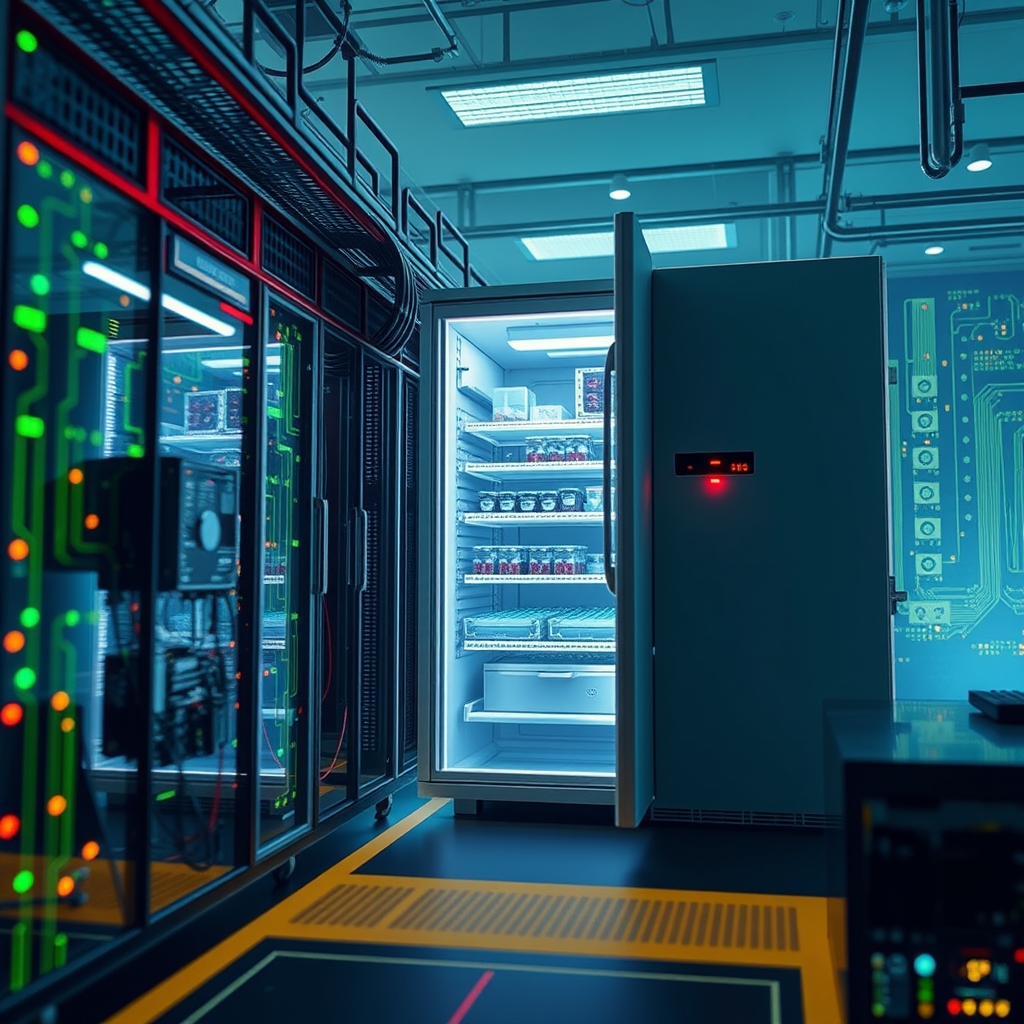
Hackers Are Targeting Your Refrigerators: FBI & CISA Sound the Alarm on ICS Cold-Chain Attacks
In November 2026, the FBI, CISA, HHS, USDA, and DOT issued a joint advisory warning that threat actors are actively exploiting unpatched or internet-exposed electronic temperature controllers and commercial refrigeration management systems across healthcare, food production, chemical, and transportation sectors. Attackers leverage authentication bypass vulnerabilities and arbitrary code injection flaws to remotely alter temperature settings, force continuous defrost cycles, and suppress operator visibility—causing food spoilage, equipment damage, fire hazards, and unsafe blood-product storage. The warning followed confirmed attacks on an estimated 250–350 French supermarkets and a French Blood Establishment facility where stored blood products were placed at risk.
This advisory reflects a broadening ICS/OT threat landscape where operationally critical but historically under-secured devices—such as refrigeration controllers—are now primary targets. The convergence of IT and OT networks, combined with internet-exposed legacy devices running default credentials, has lowered attacker barriers significantly, signaling an urgent need for OT-specific zero trust segmentation and network visibility strategies.
Critical impact
Kill Chain
ICInitial Compromise(high)
PEPrivilege Escalation(high)
LMLateral Movement(medium)
C&CCommand & Control(medium)
EExfiltration(medium)
IImpact(high)

Gorbag: The Russia-Aligned APT Quietly Draining Ukrainian VPN Credentials One Pass at a Time
Beginning in February 2025, a Russia-aligned threat actor tracked as Gorbag launched a highly targeted espionage campaign against Ukrainian law enforcement, local administrations near the front line, and defense-sector entities. The group delivered its custom C++ infostealer, BeautyStealer, via spearphishing emails carrying malicious Excel macros, and later via weaponized RAR archives exploiting CVE-2025-8088, a WinRAR path traversal zero-day. BeautyStealer harvested browser credentials, OpenVPN configurations, and sensitive documents in a single pass before self-deleting, with stolen data exfiltrated over Telegram or a FastAPI-backed C2 server. Gorbag's tradecraft suggests it may function as an initial access broker feeding credentials to downstream Russia-aligned actors.
Gorbag illustrates a growing pattern of lean, single-pass infostealers designed for rapid intelligence collection rather than persistent implantation. The exploitation of a freshly disclosed WinRAR zero-day underscores how quickly Russia-aligned groups weaponize new CVEs, and the campaign's focus on VPN credentials and electronic signature keys signals a deliberate effort to enable follow-on network intrusions at scale.
High impact
Kill Chain
ICInitial Compromise(high)
PEPrivilege Escalation(medium)
LMLateral Movement(low)
C&CCommand & Control(high)
EExfiltration(high)
IImpact(medium)

When Allies Become Attackers: Belarus APT FrostyNeighbor Deploys Wiper Against Ukrainian Critical Infrastructure
In Q2–Q3 2026, ESET researchers documented the first confirmed destructive cyberattack by a Belarus-aligned advanced persistent threat group, tracked as FrostyNeighbor (also known as UNC1151), against a Ukrainian manufacturing company critical to the country's transportation sector. The threat actor deployed Chisel, UltraVNC, Cobalt Strike, and a VBScript-based wiper distributed via Group Policy Objects, combining espionage-grade remote access tooling with destructive payload delivery. This escalation marks a strategic shift: a historically espionage-focused actor has crossed into destructive operations, acting as a force multiplier for Russian cyber objectives across the European theater.
This incident signals a broader geopolitical realignment in offensive cyber operations. Belarus-linked groups are no longer operating as peripheral actors—they are increasingly executing campaigns that mirror Russian intelligence priorities, expanding the threat surface for NATO-adjacent nations, transportation networks, defense supply chains, and critical infrastructure operators across Europe.
High impact
Kill Chain
ICInitial Compromise(high)
PEPrivilege Escalation(high)
LMLateral Movement(high)
C&CCommand & Control(high)
EExfiltration(medium)
IImpact(high)

Inside Silent Train: How Volt Typhoon Built an Ephemeral Network That Rebuilds Itself in Under Two Minutes
Since late 2023, China-backed threat actor Volt Typhoon has operated a covert, rapidly rotating infrastructure campaign dubbed 'Silent Train' by Lumen Technologies' Black Lotus Labs. The operation chains compromised SOHO routers, IoT devices, and enterprise edge appliances into ephemeral relay networks that are assembled and dismantled in under two minutes, with individual sessions averaging roughly four hours. The group exploited zero-days in Versa Director, Cisco Catalyst SD-WAN, N-Able N-Central, and VeloCloud Orchestrator, and abused devices from Fortinet, Cisco, Ivanti, F5, Palo Alto Networks, and others to maintain persistent, stealthy access across telecom, defense, government, energy, water, transportation, and emergency-services sectors across the United States.
Silent Train illustrates a decisive evolution in nation-state tradecraft: attackers no longer maintain static botnets that can be seized or sinkholed. By rebuilding relay chains continuously and targeting centralized management and control-plane platforms, Volt Typhoon can pre-position inside critical infrastructure indefinitely—raising the urgency for network visibility, zero-trust segmentation, and encrypted east-west traffic controls that can detect anomalies even when the underlying infrastructure changes daily.
Critical impact
Kill Chain
ICInitial Compromise(high)
PEPrivilege Escalation(medium)
LMLateral Movement(high)
C&CCommand & Control(high)
EExfiltration(medium)
IImpact(medium)



